Translation, the purposeful selection of words to convey meaning.
Recently we were asked to describe November Project in one word. One. Single. Word. We couldn’t lean on our handy catchphrases. You know, the hashtags that we may gloss over because we see them so often, because they melt in our way of life at November Project. Describing November Project in one word meant sifting through our individual experience of the workouts, sunrises, whatevers. And then purposefully deciding which word in our lexicon could encapsulate all of that. Essentially, we translated.

It woke us up. Having to be mindful about word choice, rather than going for our defaults. Perhaps it helped others understand why we keep waking up so goddamn early, why we lace up when the weather in our bedroom is better than outside. Perhaps the word choice translated to others what showing up could mean for them specifically.
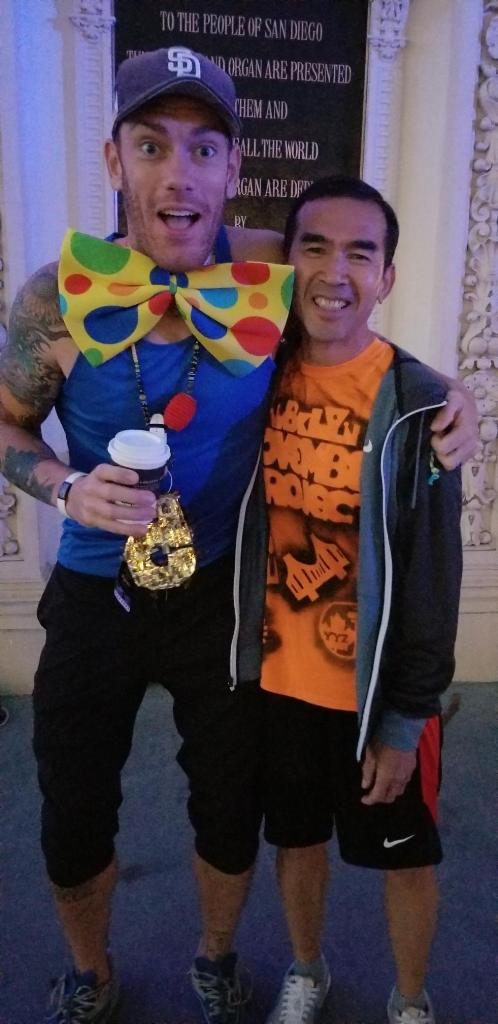
A year and half ago, I asked my dad to come to a workout. Why schlep an hour on the subway to get to November Project when he could just do pull-ups at home or bike along a nearby parkway? I baited him with free breakfast and the opportunity to show that he can keep up with people half his age. That spoke to him, he agreed. He showed up, he loved it. After we left the workout, I told him how about November Project—how it started, that we are weatherproof, that tribes exist in London and Malaysia. You know, a snippet of the whole shebang. Except I was saying this all in Chinese. And it was weird.

My dad and I communicate in Chinese. That’s normal. November Project is integrated in my life. That’s normal. But communicating about November Project in Chinese was not normal. I was translating and using a different lexicon to communicate. It helped my dad understand our free-fitness movement. It made his eyes big, his grin wider, and his curiosity ignite. When he travels to other cities, he’ll ask about attending a workout. Even if that means I’m not there with him to translate. He has traverballed to Toronto, San Francisco, Oakland and San Diego without me. He doesn’t necessarily understand the English that is spoken at the workouts. If you asked him to do a “burpee”, he’d probably smile blankly back at you. One time, he asked if strangers get offended by the bounce. He thought “fuck yeah” meant we were cursing at people rather than getting hyped. When he goes to another tribe without me, I usually ask a friend to guide my dad through the workout. But despite this, my dad understands. He gets what November Project means.
My dad’s first workout wasn’t just free breakfast and working out with a bunch of young people. It was him hearing, in a set of words he knew, what November Project is. “It’s not what you say, it’s what they hear.” (a concept with its own book title). It’s what the individual listener will resonate with. Something for us to think about when we explain November Project to others. When the handy catchphrases have been used so often that they do not carry the same weight. Simultaneously it wakes us up too. Having to translate, whether from one language to another, or from many words to just one, takes us off auto-pilot and into the present. It allows us to zoom out, to “shake the sleeping self” (if we’re going with the theme of book titles here), to rediscover our choices. In translating, in helping someone extract meaning in a way they can actually understand, we can find our own meanings too. So how would you translate November Project into one word?