


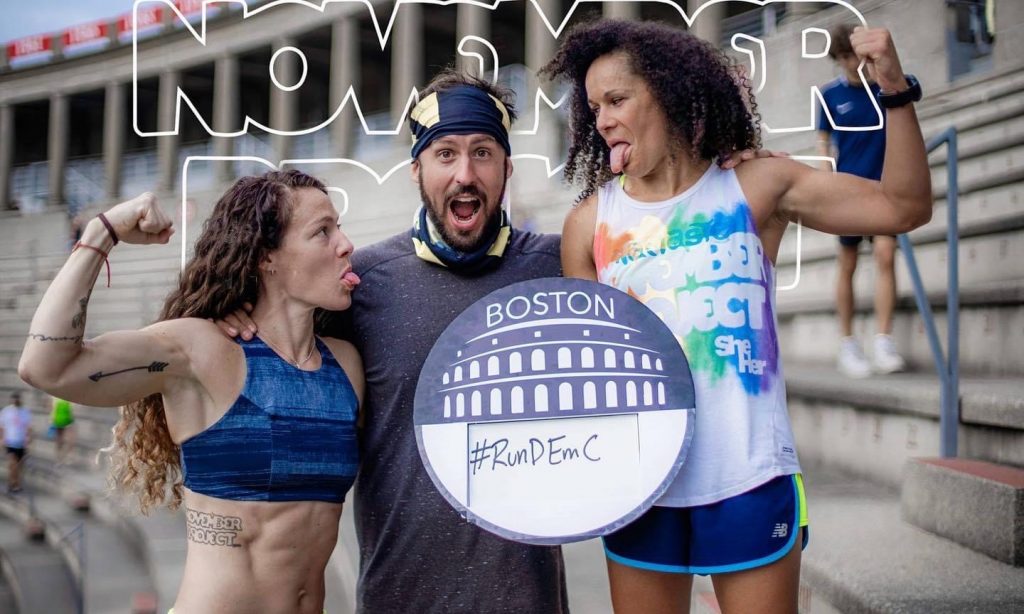
I remember when Emily and Capozzi approached me to discuss coleadership. My initial reaction was “there’s no way I can take on that huge responsibility on top of everything else”-that “everything else” referring specifically to the multiple doctors appointments I attend every week for both mental and physical health conditions in addition to working 3 jobs. Those closest to me understand that these health conditions are unpredictable despite having the privileged access to treatment; My life often hangs in a precarious balance between “together enough” and “really not ok”.
As I contemplated the offer of leadership, I couldn’t overlook the fact that this opportunity was being extended to me-a biracial Black woman who is public about their struggles with mental illness, physical disability, and chronic medical conditions. Being offered a “seat at the table” of leadership as a woman of color was a tremendous privilege; November Project is a majority white community with only a handful of leaders globally who identify as POC. It felt significant to imagine myself in a position of leadership with the chance to use my voice to diversify and influence the direction of this global fitness movement.
I didn’t say yes because I thought I could handle it all; I said yes because I couldn’t handle knowing that another person of color might not be asked again in the future. I did it because my African ancestors didn’t come to this country as enslaved people hundreds of years ago for me to shy away from something that felt daunting and overwhelming despite also being entirely within the realm of possibility if I put my heart and mind into it. I did it because I believed that Boston deserved to see someone standing up there who occupies identities that have long been oppressed and marginalized. If I said no because of the impact of my race, mental illness, or chronic health conditions on my overall well-being, I feared it would reinforce the idea that those identities [which are perpetually oppressed] are incapable of successfully stepping into positions of leadership.
Perhaps it’s self-imposed pressure that has weighed heavily on my shoulders throughout the past 10 months of leadership, or perhaps it’s exactly what every Black woman in this country feels in every space they occupy. There is a tremendous burden on people of color to not make mistakes while there exists the simultaneous pressure of constantly having to prove your worth. It is in this relentless and exhausting space that I find my own mental health becoming closely entangled with racism, because truly how could it not? Imagine being scrutinized for everything you do and all that you fail to do in a world that is so quick to overgeneralize negative traits to Black people and then use that discriminatory rhetoric to inflict violence upon those communities.
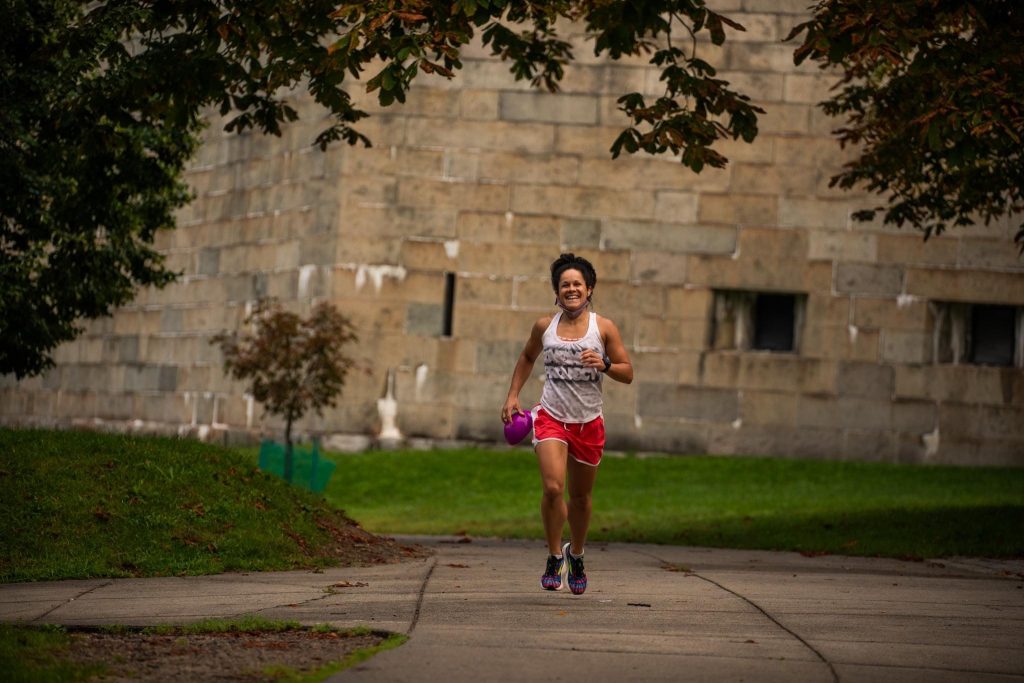
Back in February, I was eager to create an event to honor Black History Month. My co-leaders were fully supportive of my idea to have a workout run through Boston neighborhoods that we rarely frequent-those on the other side of the imaginary line that separates the very racially divided city of Boston between affluent & white, and poor & Black. It felt like a moment where I could assert my role as a Black leader in a powerfully influential way, and I believe it would have if not for the eventual demise of my own mental health.
The aforementioned precarious balance of “together enough” and “not ok” swung too far in the dangerous direction. For weeks in February and well into March and April, I spent more time in the hospital and with doctors than anyone else. I kept it quiet to most people and continued to show up when I could, doing my best not to appear incapable of juggling my responsibilities, feeling the pressure of being a disabled Black woman trying to prove her worth. But all along, I felt ashamed to let Black History Month, a time of celebration and honoring of the contributions of my own ancestral heritage, pass by without mention. I felt as though I let down the Black members of our community who deserved that moment of celebratory recognition, and I have been unable to shake that missed opportunity regardless of how justified the reason.
As the year has gone on and we’ve entered May, Mental Health Awareness month, it feels imperative to share these thoughts. As someone who believes in sharing stories about mental health in order to remove the stigma so commonly associated with these conditions, I hold myself accountable to being open and honest about my experience so that we better understand the devastating impact of mental illnesses on those around us. Moreover, it is crucial to highlight the relationship between mental health and racism in the wake of yet another mass shooting that was intentionally targeting Black people.
I wasn’t quiet about Black History Month in February because it didn’t matter; I was quiet about it because I wasn’t sure in that moment that I mattered. I live in a world where people like me are constantly treated as though we are less than, despicable, and dangerous people to be silenced and eliminated.
As I stood before the group last week, I was nearly in tears as I asked everyone to take a moment of silence to honor the victims of the Buffalo shooting. Every mass shooting, every act of police brutality, every hate crime leaves me on edge and filled with both rage and despair. These incidents feel personal because they are personal. And as much as I want to be an advocate for racial equality, I recognize that we cannot expect people of color to educate and advocate without also fully acknowledging the impact of the trauma of being Black [or any person of color] in this country. For white people, it’s a horrifying story on the news but it’s too easy to lace up and go for a run without a second thought. For people of color, it’s a terrifying reminder of the danger of living in a society that is so willing to take our lives into their hands without a second thought or just consequence. I had tears in my eyes not only because people’s lives were taken, but because I realized that this impacted me far more than 98% of the people I stood before asking to take a moment of silence. It felt like the least I could do as a leader even though I am fully aware that for some people who wished to show up and “just run” it was more than they might have wanted to do.
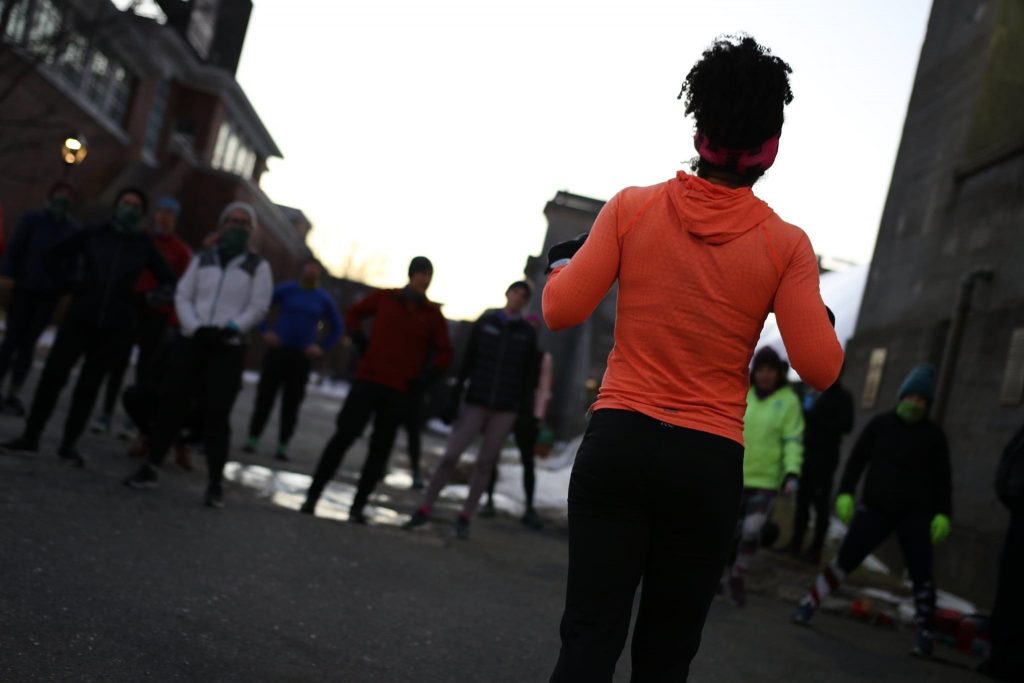
It has been 2 years since the brutal, unnecessary, senseless murder of George Floyd and subsequent “racial reckoning” of 2020. But with each violent, emboldened hate crime toward communities of color, I am left feeling hopeless and helpless that I will ever be seen as anything more than the discriminated half of the whole of my Black father.
Every act of targeted and intentional violence toward Black, Brown, and Asian communities reminds me of the urgency in using this privileged position as an opportunity to demand that we acknowledge racism for what it is. We must call attention to the very real fact that many people do not feel safe existing in this country, let alone feel safe joining a running community of mostly white people, and that hate crimes leave so many of us hanging in the balance of terror and hopelessness, wondering if we might be next. But the truth is that as much as we need co-leaders who claim diverse identities, it’s important to recognize that it is emotionally laborious for us to enter into spaces as minorities having to educate so many people who cannot begin to understand our daily lived experiences.
It is imperative that we do better. I believe that our November Project community deserves the opportunity to recognize the historical wrongs that have led to the oppression of so many diverse groups of individuals and celebrate the contributions of these persons, and that even a fitness community is a space where we can begin to bring those stories into awareness. We cannot separate the harm inflicted upon any individual identity from the spaces we occupy in the world, whether at work, on a run, or anywhere else we go. I aspire to create a community and live in a world where there are more equitable systems everywhere, where Black and Brown voices are empowered to speak up AND be received with the same respect and prestige as their white peers. I hope that one day I will be able to consider my role in leadership not as exceptional or exemplary because of my identity; Rather, I hope I am able to continue to draw upon the strengths in our community and beyond to make November Project Boston a more diverse and inclusive place.
I’m not a perfect co-leader (newsflash: no one is). There are ways in which I will come up short and miss the mark, and I’ll take those lessons as learning opportunities and strive to do better tomorrow. But I am committed to being my genuine and authentic self and demonstrating the humanness inherent in being a leader with all of my intersecting identities. I know there will continue to be many struggles and hard times ahead, for me and for all of us. I hope that in giving voice to these experiences we can all grow in our own humility, compassion, and openness toward others.
Some days showing up as a leader might mean offering a reminder to be gentle toward yourself and others in recognition of mental illness that affects millions of Americans, undoubtedly someone you know. Sometimes it might be giving a push to try a new workout or exercise you’re not certain you can do. And other times it might be shedding light on current or historical events that are imperative for us to consider in regard to the impact they have on members of our community. But what I know after 10 months of leadership is that the very reasons I was hesitant to become a co-leader are the things our world needs to hear most right now.
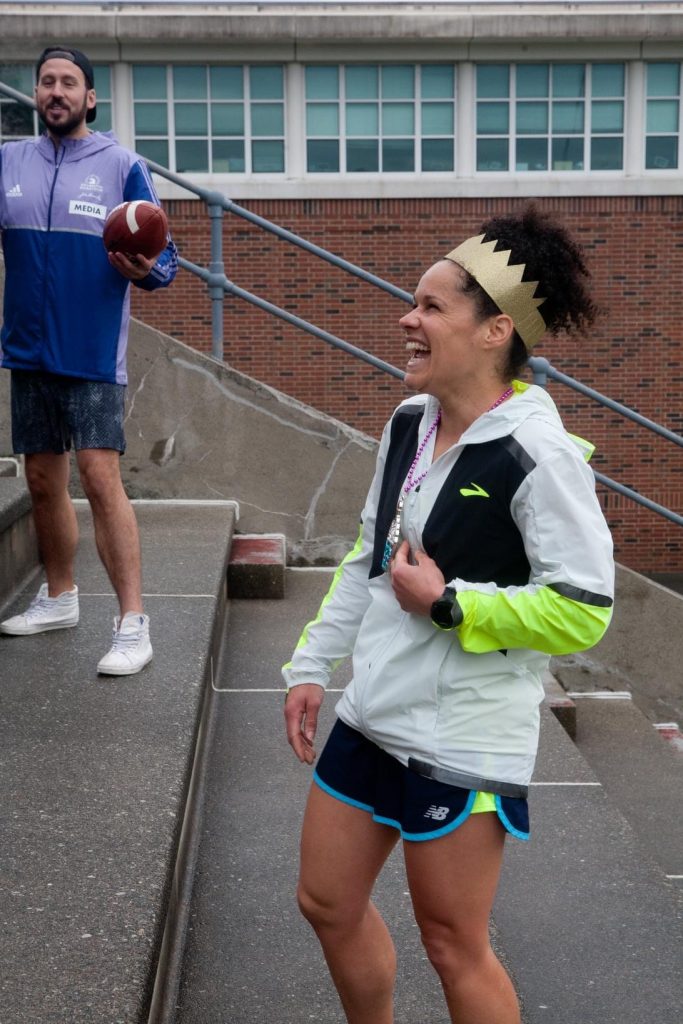


Dana, thank you for your leadership, your authenticity, and your emotional labor. You make me proud to participate in November Project.
You’ve done wonderful work in this piece. So many needed action points and things to think about. Supporting you from way the eff out here (lol) wishing I can hold your hand and walk with you a while. <3
This was such a powerful vulnerable message. Thank you for sharing your struggle and success and for stepping up and being a leader. As somebody who is at best plodding and slow and is aloof on a good day who always feels apart from the cool kids who run fast and are popular, it can be hard to remember that other people have struggles I might or might not see. This was a good reminder that belonging or not belonging can have many different facets even within a group where part of your identity doesn’t fit as naturally.
Dana I am so so so so so so so so so so fucking glad that you are here.