

This video is brought to you by the lovely Tamarra Canu.
We are #weatherproof. You might think we are crazy, and you are right. If you never really knew how to dress in the winter, here’s a guide so you can be #weatherproof too (and survive the cold). The secret to being #weatherproof is to layer up. Layering will help wick away moisture so you are dry and trap warm air to keep you warm. Layer up in 3 sections: Base Layer, Mid Layer, Outer Layer.
The more layers, the more air will be trapped as heat – you can always take a layer off!
FABRICS
Merino Wool
- Warmer than synthetics for temperature control
- Good moisture control (absorbs 36% of its weight in moisture without feeling wet)
- Antibacterial properties so you stink less
- Doesn’t dry as quickly as synthetic fibres
- More expensive
- Less durable
- Base Layers
Synthetic Polyester
- Good for moisture,
- Durable
- Quick-dry
- Not good for odour control
- Not good by itself to keep warm
- Mid Layers
Polyester Fleece
- Traps heat
- Wicks moisture
- Mid Layers
Goretex
- Waterproof (no water will get through)
- Good for rain, snow
- Less breathable
- Bulkier
- Outer Layer
Water Resistant Fabric (vs Waterproof)
- Will absorb water if there is a lot
- Not good for super rainy or snowy days
- Will stop wind
- Outer Layer
Cotton
- Cotton is the enemy
- Cotton does not like hugs in winter
- Cotton will make you cold
3 Layer System – Base, Middle and Outer…kind of makes sense hey?! (It’s not rocket science but it will allow you to really enjoy our winter mornings together!)
1. BASE LAYER: Wicks away moisture
- Needs to fit snug, key for moisture wicking…(plus will show off that core you’ve been
working on during our destination deck workouts) - Long sleeve or short sleeve tops and tights
- Recommended Fabrics: Merino Wool or Synthetic Polyester
2. THE MID LAYER: This is about insulation
- Fits loose – traps air pockets between base layer and mid layer.
- Lighter – will be good for continuing the movement of moisture away from the body and trapping the warm air in its pockets.
- Fleece vests are also a good option for a middle layer to keep the core warm
- On the bitter cold days, add more mid layers
- Recommended Fabrics: Polyester Fleece (Fleecy waffle pattern)
3. THE OUTER LAYER: Protecting you from the elements
- Protects you from the elements
- Waterproof: Will stop all snow and water coming in. Not as breathable as a water resistant material.
- Water Resistant: Will stop wind, but will absorb water if there is a lot of it.
- Recommended Fabrics: Goretex (Waterproof) or Water Resistant Fabric
ACCESSORIES
The best way to be fashionable (and warm) is to accessorize.
- Good Toque (winter hat for our American friends) – fleecy on inside poly/ nylon on outside (a little heavier but warm and will not feel wet as quickly) or lighter/thinner merino wool option (not as warm).
- Gloves/Mitts – if you’re wearing gloves you may want to layer them with a mitt shell as well. Mitts will be warmer because your fingers aren’t separated and there will be more heat trapped.
- Scarf, neck gator, buff, turtleneck base layers to trap heat (even a balaclava for those really cold mornings!)
- Socks – dual layer, wool on the inside and poly-synthetic on the outside (warmth and comfort, blister control) Beware of how tight your foot feels in your shoe..if its too tight with your sock layers your feet will still get cold…think…no room for blood to circulate and bring you heat!
- Shoes – There are a bunch of winter shoes out there. Look for ones that will insulate your feet & have good grips for traction in the snow and on ice.
- Shoe Grippers – These are spikes that go over your shoes. These will help with the snow. I own a pair but did not need them once last winter. Coiled grippers make it easier on wooden stairs. If you have good trail shoes, you will not need them.
If none of that makes any sense to you, here’s are some pictures of what both Jen and Nadim wear.
Base Layers
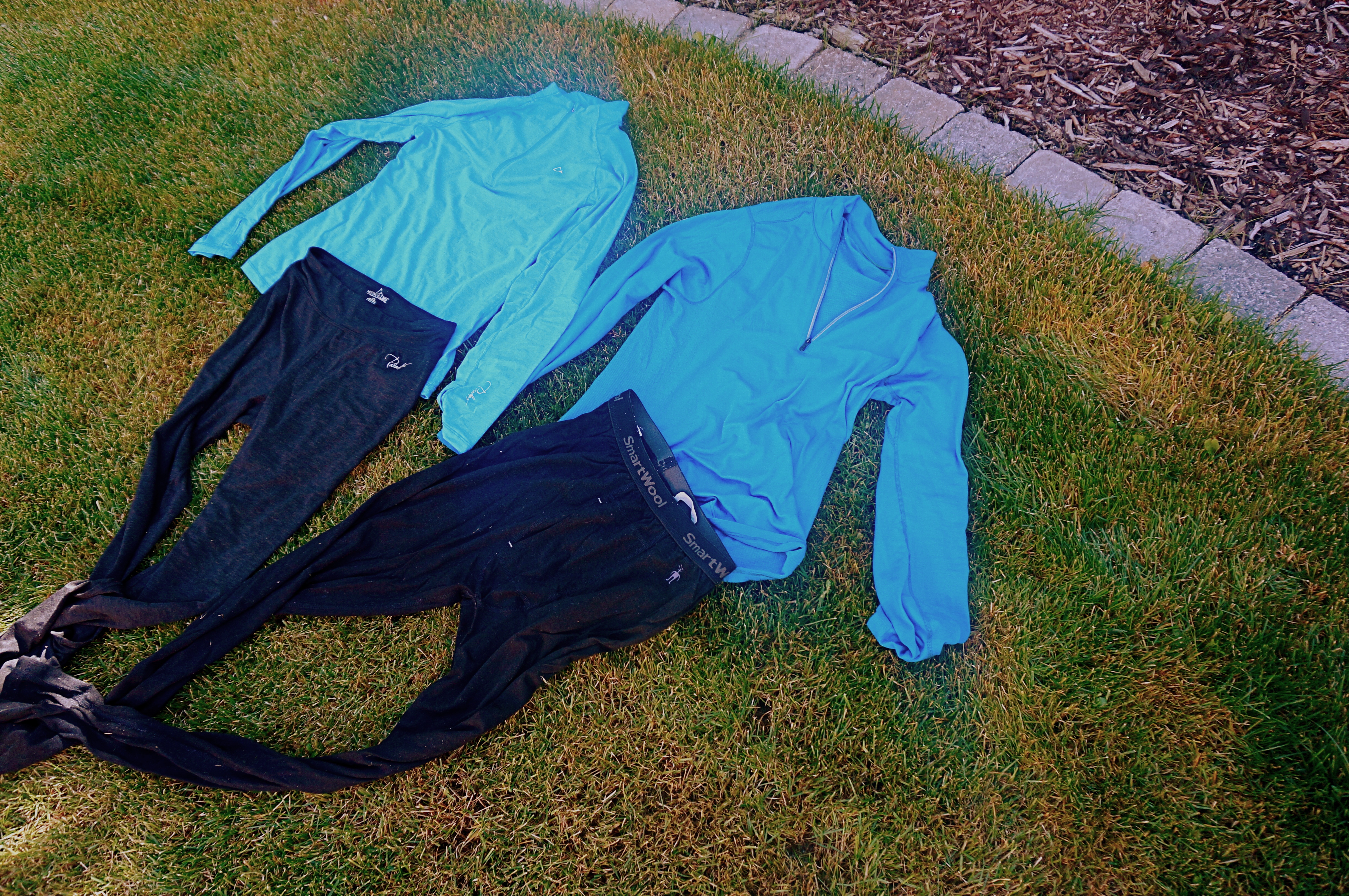
Jen
Poly/wool blend tights or thin fleece tight or thin fleece lined tights
Poly/wool blend long sleeve
Nadim
Black merino wool pants
Blue merino wool long sleeve
Mid Layers
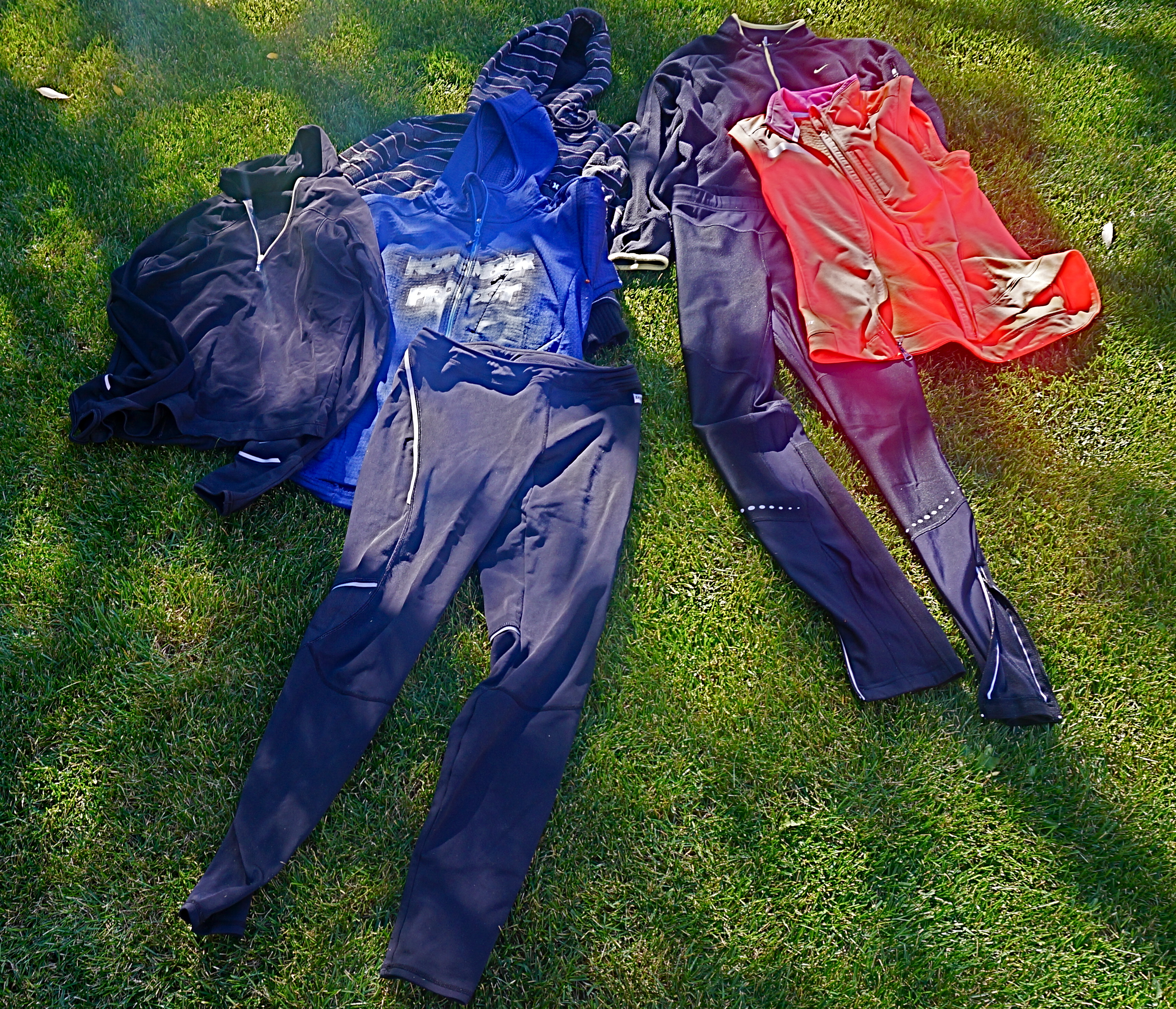
Jen
Windproof tight
Fleece long sleeve
Fleece-lined vest
Nadim
Black fleece lined tights
Black fleece lined hoodie
Blue fleece waffled hoodie
Thick hoodie (for the really cold mornings)
Outerlayers

Jen
Windproof tight
Windproof, water-resistant/proof shell
Nadim
Black goretex outer layer (thinner than most goretex jackets)
Accessories
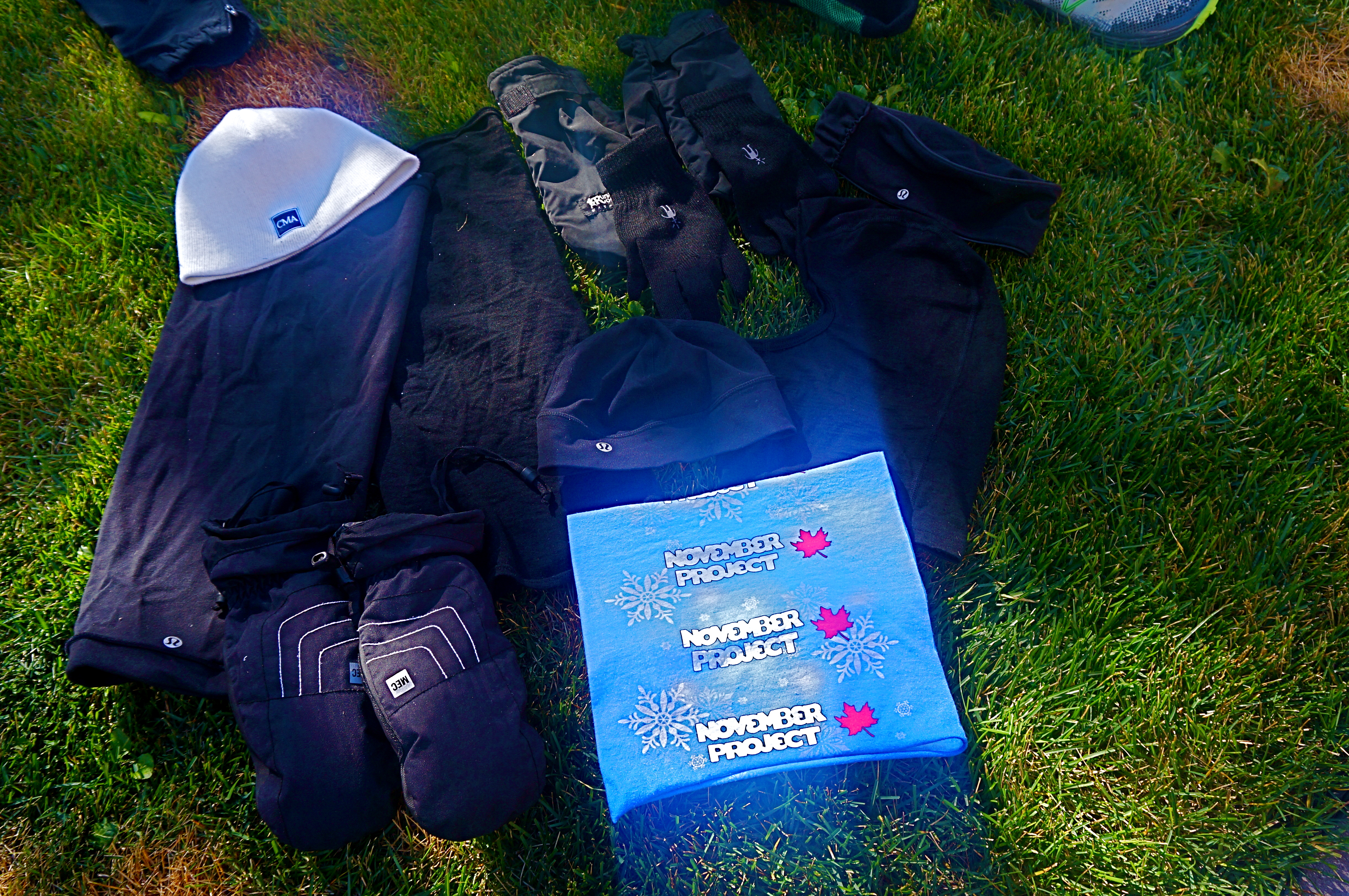
Jen
Fleece gloves or thin wool liner with outer mitt layer, Gloves with windproofing layer
November Project buff (or merino wool buff) to cover the face or belaclava for the really cold days
Headband to cover ears or touque
Nadim
Thick black mitts with rubber palms
November Project buff to cover the face
White touque/hat or black merino wool buff
Footwear

Jen
Medium weight merino wool socks or Thick wool socks (for really cold days)
Soloman cold-weather shoes – insulated and have great treads for traction (purple ones)
Nadim
Black and green medium weight merino wool socks (base)
Thick grey wool socks (for really cold days) (mid)
Trail shoes with a plastic-y shell (outer)
PS – Jen also makes a thermos mug of tea that she leaves in her car to sip on during her drive home after the workout.
Share via socials:


Would lo e to have one….are this avalable? November Project buff
Im from NP madison wi
That was so useful! Thank you!